

How can Shell accommodate for the increasing EV charging demand by 2030?
Type
Team Project
Role
Market Research & UX/UI Design
Client
Shell Recharge Solutions
Problem space
1.9 mil.
electric vehicles (EVs) in the
Netherlands by 2030 as an ambitious
target set by the Dutch government.

Source: Nederland Elektrisch
70%
of Dutch households do not have a
private driveway.

Source: Refa, 2020
17 mil.
new charging points are still needed the Netherlands by 2030 to support transition to electric vehicles.

Source: Nationale Agenda Laadinfrastructuur
Solution
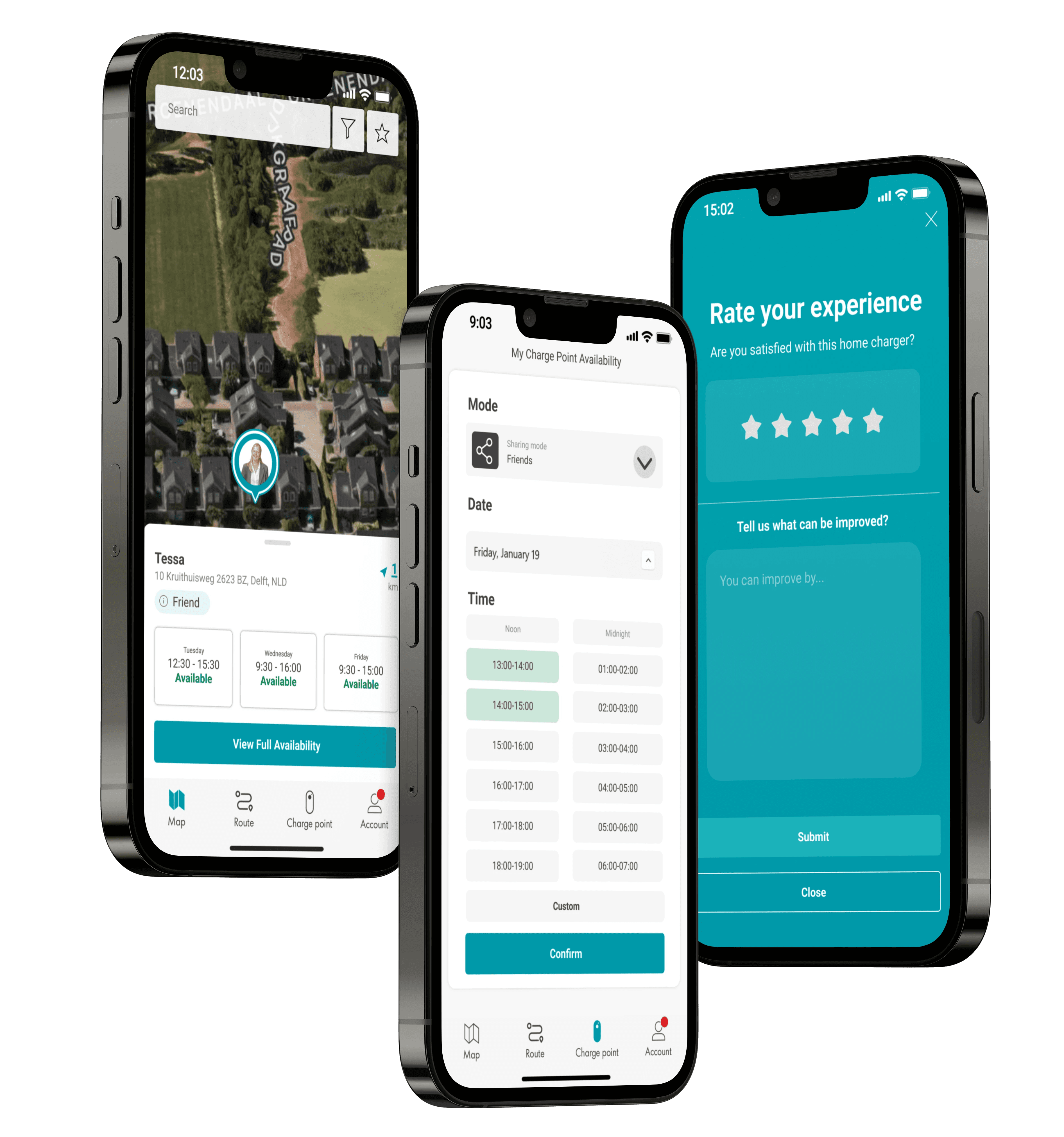
A platform that supports homeowners to become micro-mobility hubs by allowing them to seamlessly switch their private charger between Private, Friends, and Public sharing modes. It is designed to scale beyond single homes towards serving entire residential complexes, creating a unified, community-driven energy network.




OUTCOME & Reflection
Validated by the industry
RESULT
A validated platform concept ready for pilot launch, endorsed by 5+ organisations in the EV sector and aligned with Dutch mobility policy. The Neighbour Grid concept demonstrated strong user willingness to share charging infrastructure in community-driven networks.
Community-scale thinking
The solution was architected to scale beyond single homes to residential complexes — turning a personal asset into shared neighbourhood infrastructure.
Policy-aligned design
Aligned with the Dutch National EV roadmap and grid deload strategies — creating a design artefact with real regulatory relevance.
User-led insights
Qualitative interviews with EV drivers revealed key tensions: convenience over sharing, and a gap in cross-user communication — both addressed by the Neighbour Grid proposition.
→
Want to go deeper?
This page shows selected highlights. I can walk you through the full research process, design decisions, and validation in a live session, just reach out.
Request a walkthrough
Other selected work

