
How can Shell accommodate for the increasing EV charging demand by 2030?
Type
Team Project
Role
Market Research & UX/UI Design
Client
Shell Recharge Solutions
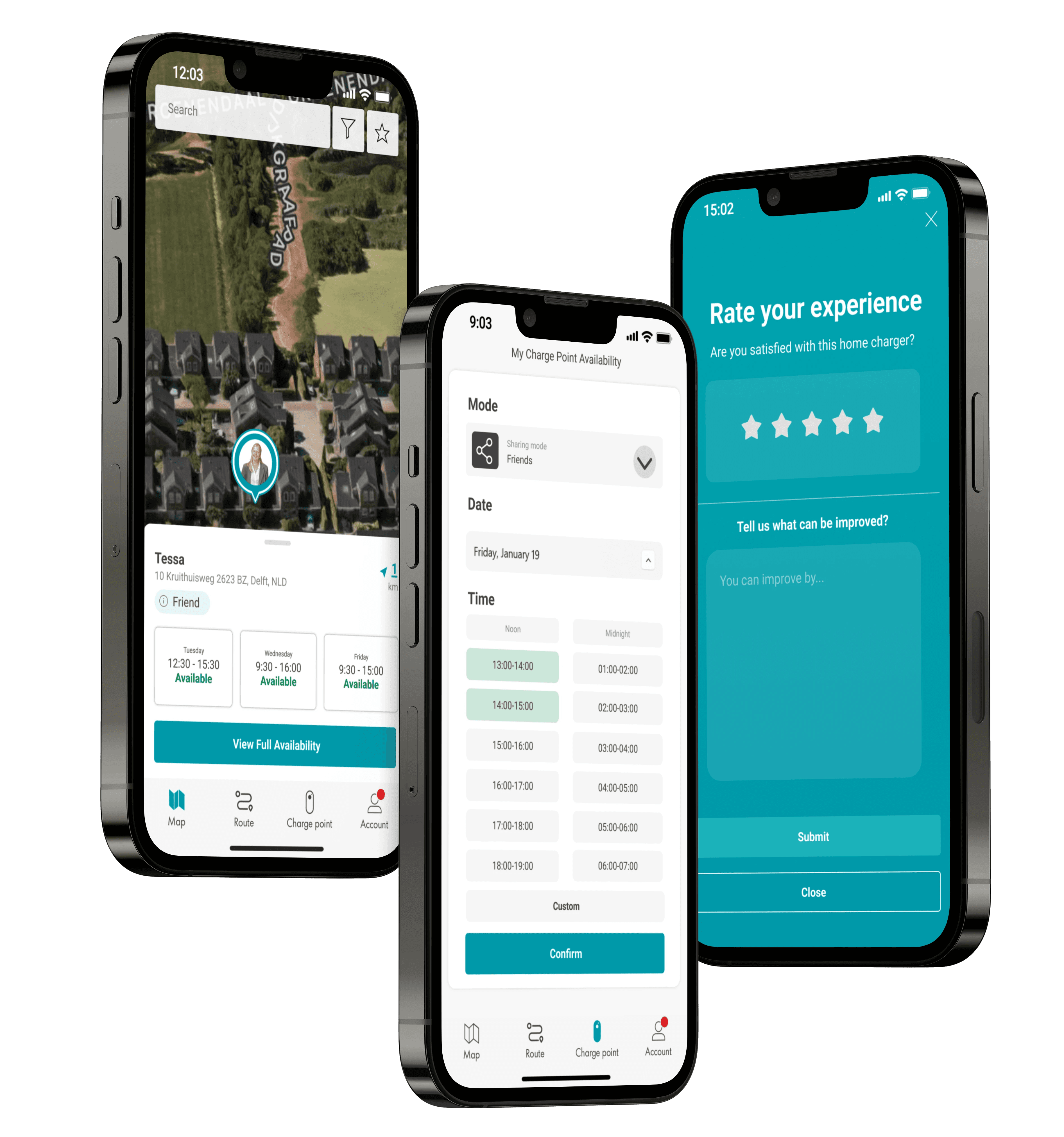
Want the outcome first?
Click arrow to jump to the solution, or scroll to see what forced it.
Problem space
1.9 mil.
electric vehicles (EVs) in the
Netherlands by 2030 as an ambitious
target set by the Dutch government.

Source: Nederland Elektrisch
70%
of Dutch households do not have a
private driveway.

Source: Refa, 2020
17 mil.
new charging points are still needed the Netherlands by 2030 to support transition to electric vehicles.

Source: Nationale Agenda Laadinfrastructuur
Context
Between ambitions, policy, and homeowners who don't own the charger next to them
Shell Recharge sits in a market it doesn't lead. It has a strong technology brand but no consumer relationships and no owned car brand sitting behind Tesla and ChargePoint on both presence and satisfaction. Meanwhile Dutch policy is actively pushing distributed, grid-friendly charging, and over half of Dutch households structurally cannot install a private charger at all.
This project sits at the intersection between a mid-tier EV brand, a policy push toward shared infrastructure, and a market where the majority of demand can't be served by the single-owner model Shell currently sells.

Constraint
Shell can't design the experience the way a utility designs for its own infrastructure. It's designing for someone else's driveway, someone else's electricity bill, and someone else's spare capacity with only indirect leverage.
Business Objectives
Where the platform aims to create impact

Differentiate in a market Shell doesn't lead
Compete on community-fit, not just charger count.

Convert underserved demand
The 70% without driveways is currently unaddressed by any competitor, making it a first-mover space.

Stay grid-friendly
Align with Dutch smart-grid and dynamic-pricing direction.
Process
How we moved towards the 2030 vision

Interviews
What people said about sharing wasn't what they did
Interviews surfaced a real gap between stated values and observed behaviour. Interviewees named sustainability as their main motivation to drive electric. The same people described running a cable illegally across a public sidewalk because it's "more secure" than any legal option, and leaving a note under a stranger's windshield wiper asking them to move their car. A separate angry handwritten note showed that informal sharing was already producing conflict, with no platform involved yet. Thus, people are philosophically pro-sharing and behaviourally protective of access.

Design Decision
Don't build one shared-access tier but one where access scales with actual social trust instead of assuming strangers will behave like neighbours.
Research findings
The problem was never "not enough chargers"
Three forces are converging independently creating pressure for a charging system that should be smarter, more flexible, and more distributed by 2030:
Technological: The capabilities for smarter, connected charging are already here and rapidly maturing.
Legal: Regulation is moving charging infrastructure toward greater flexibility, while changes to the energy market are reshaping the economics of home charging.
Economic: EV adoption is accelerating faster than physical charging infrastructure can plausibly scale.

Design Decision
The actual gap is not "more chargers," and not "a better app for existing owners," but the coordination layer nobody in the competitive set has built yet. Thus, Shell needs to differentiate on access, not hardware.
Concept
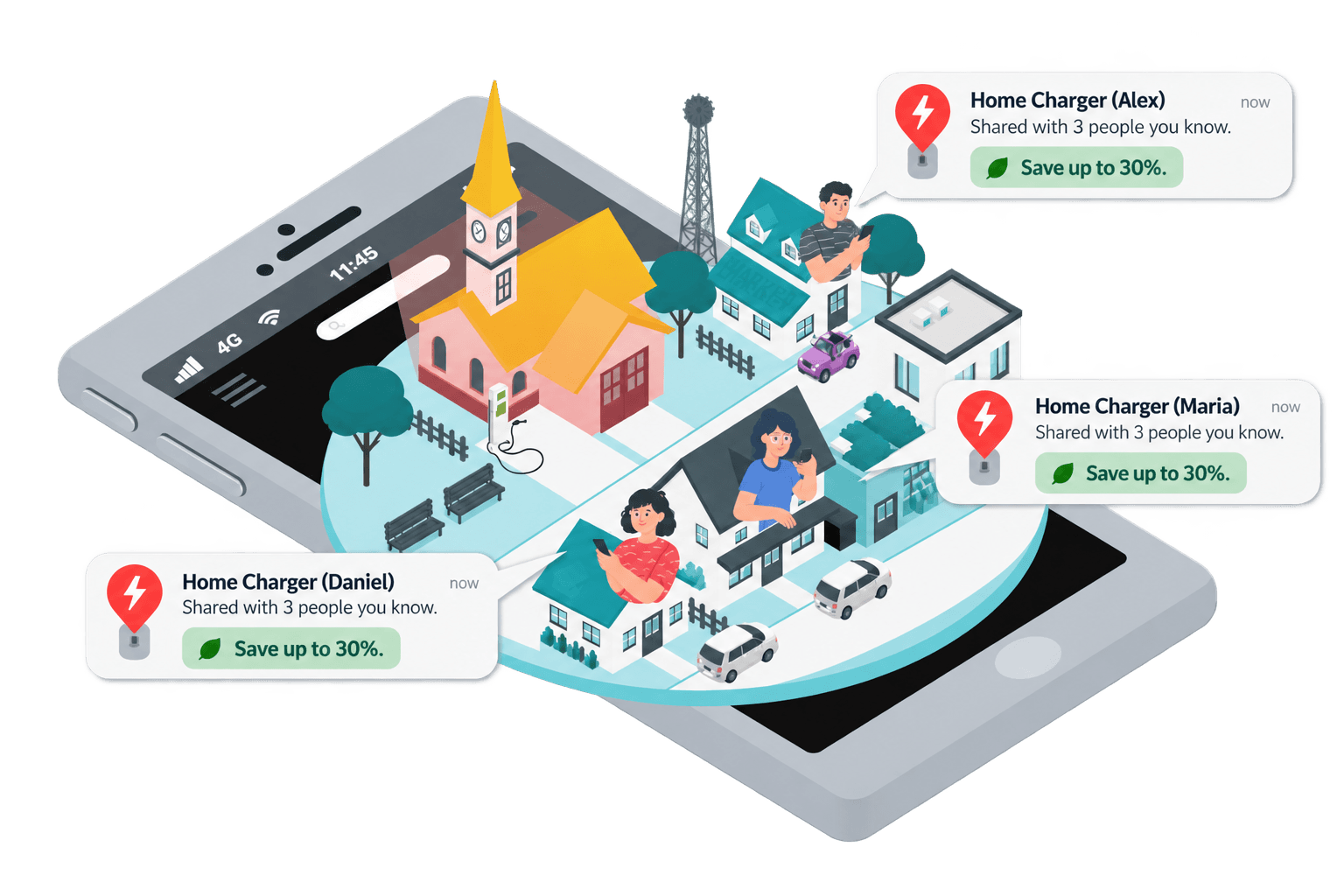
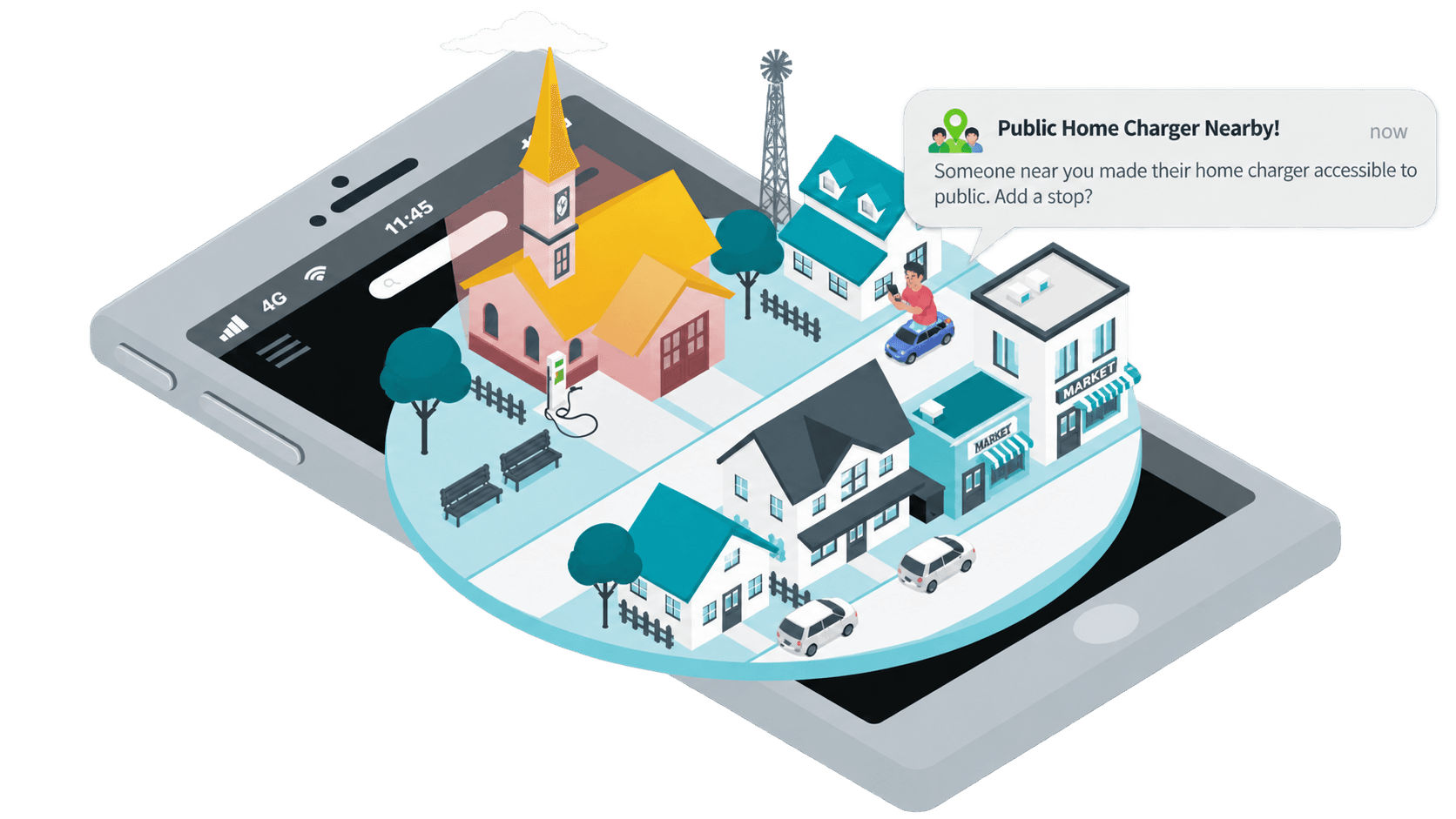
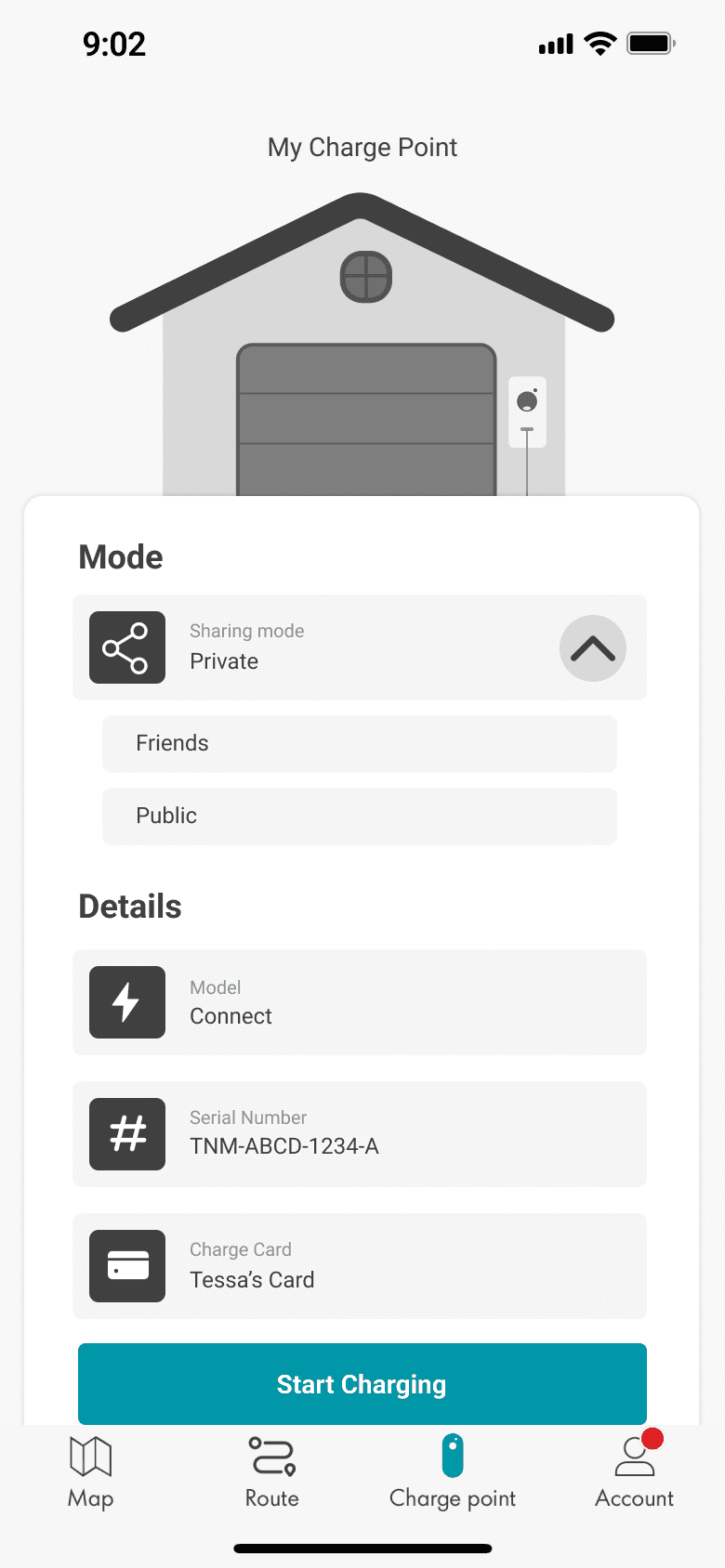
Three modes of sharing
The charger stays with the household. No outside access and no bookings, the default state when someone first joins the grid.

Solution
Introducing Neighbour Grid
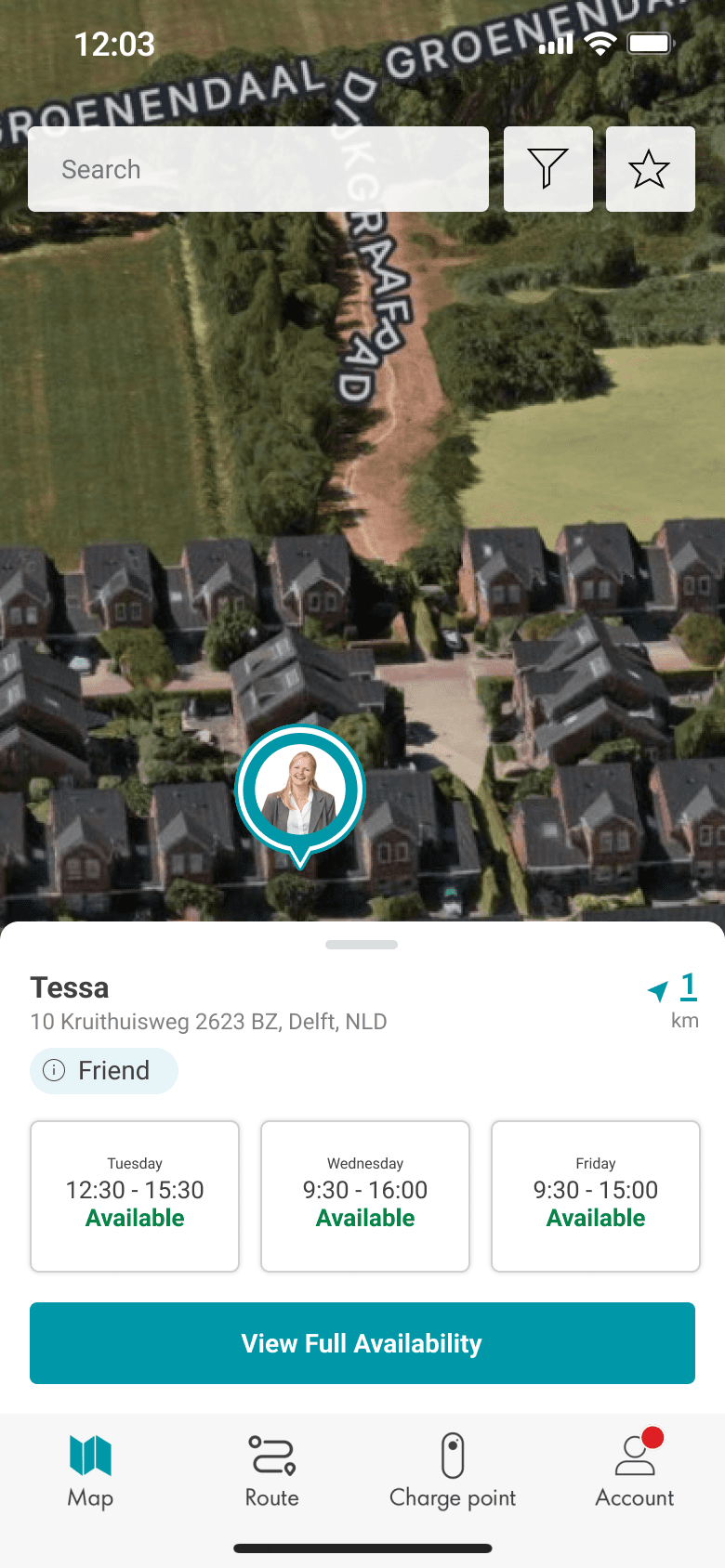
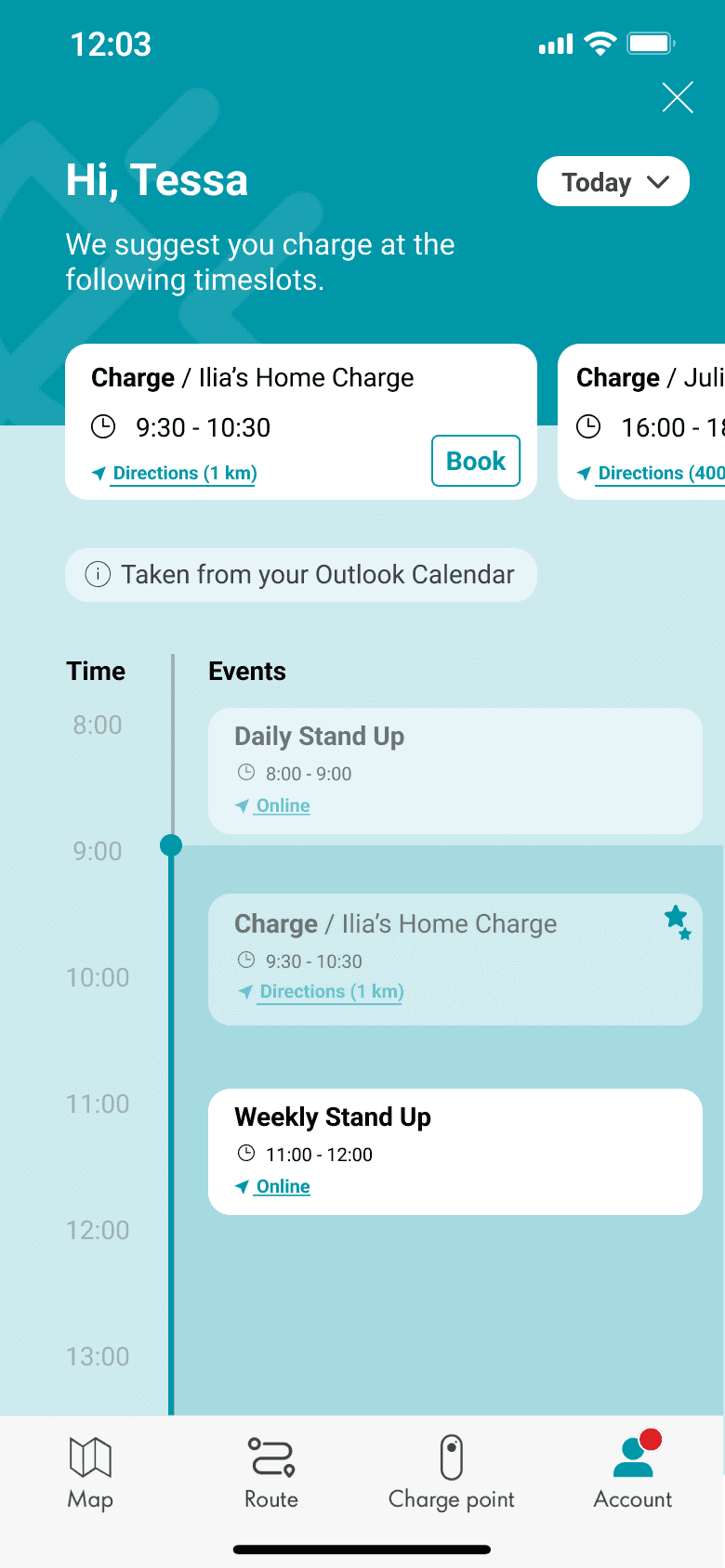
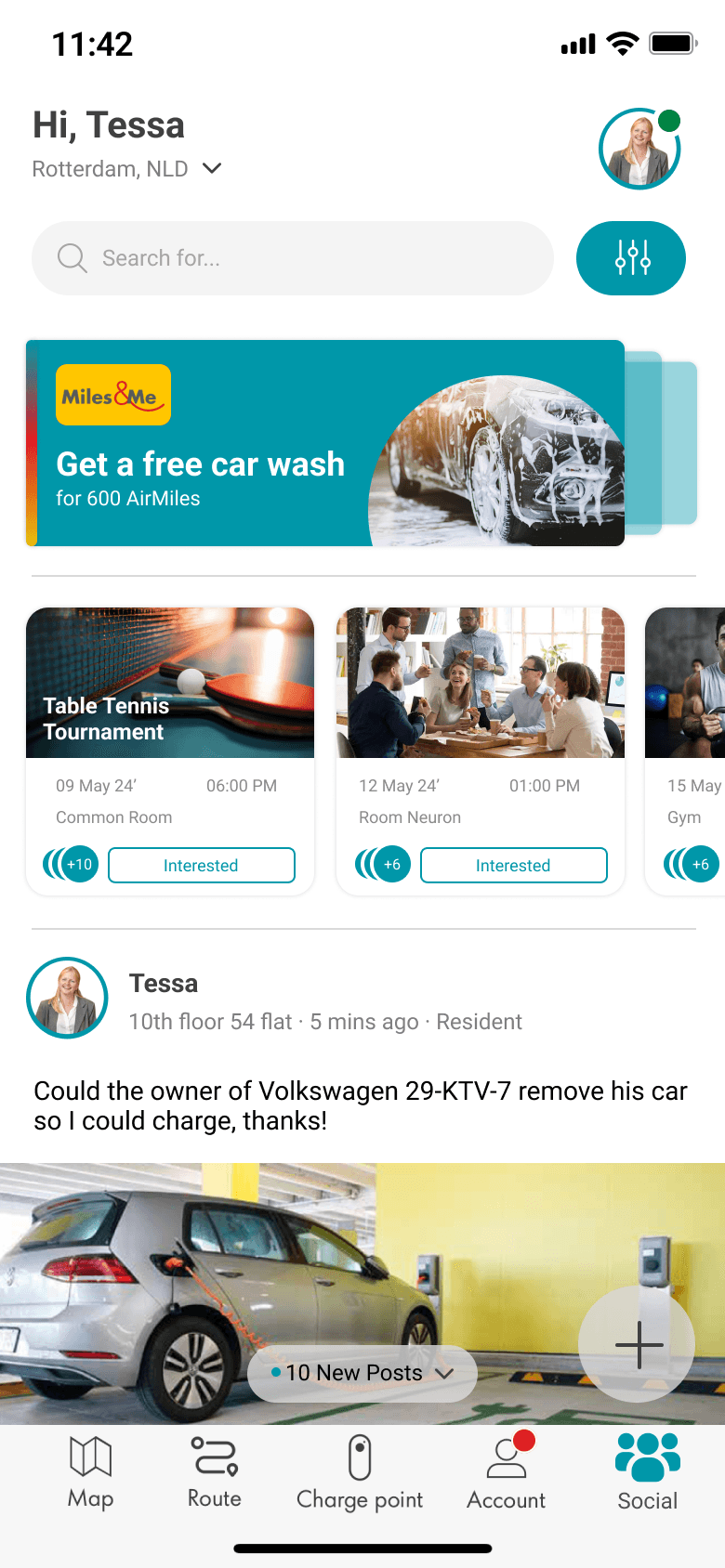
A platform that supports homeowners to become micro-mobility hubs by allowing them to seamlessly switch their private charger between Private, Friends, and Public sharing modes. It is designed to scale beyond single homes towards serving entire residential complexes, creating a unified, community-driven energy network.
A sharing-economy model: see the home chargers available in your area and request one from its owner.
Roadmap
How this product looks across horizons
Piloting starts with single-family, private-driveway homes as the easiest place to prove trust and liability work before extending to apartment buildings and shared complexes. That also means the group with the most acute need (the 70% without a driveway) is served last, not first.

Evaluation
What the testing surfaced
What worked
Control over availability and scheduling was important. People were more willing to share when they were not giving up control of their charger.
“It feels less like giving a stranger access to my home and more like helping someone in my neighbourhood.”
— Participant 5
What Didn't
Users still had trust and accountability concerns, particularly around access, responsibility and potential problems with strangers using their charger.
“I’d want to know what happens if something goes wrong.”
— Participant 3
What i didn't test
Shell mediates a relationship it has no direct stake in, and none of private testing confirmed whether that mediation actually reduces conflict, or just relocates it into an app.


